
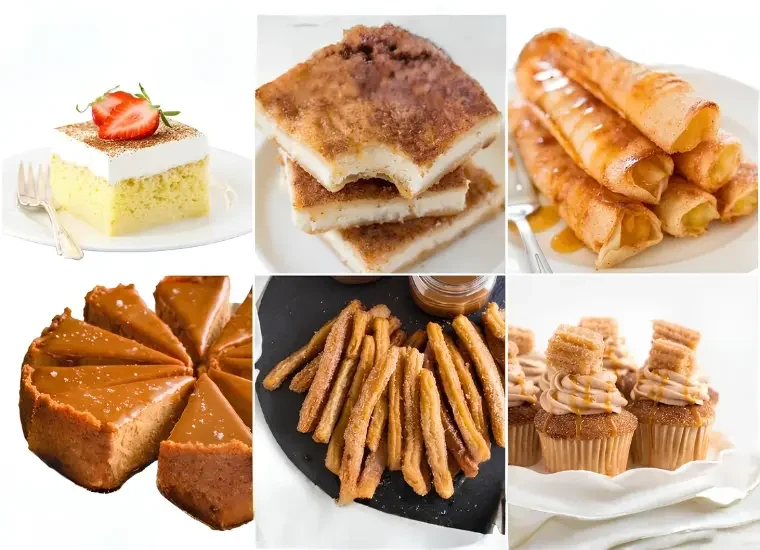
The top 10 Mexican desserts are tres leches cake, churros, flan, conchas, buñuelos, Mexican wedding cookies, arroz con leche, paletas, cocadas, and capirotada. Every one of them started as a regional specialty before spreading across the country, and most still carry the fingerprints of three cultures: indigenous Mexico, colonial Spain, and 19th-century France.
We put this list together after years of watching which desserts guests actually order and ask about at our own counter, then cross-checked the history against food-research literature to keep the facts straight.
Top 10 Mexican Desserts at a Glance
| No. | Dessert | Category | Best Known For |
| 1 | Tres Leches Cake | Cake | Three-milk soaked sponge cake |
| 2 | Flan | Custard | Caramel-topped baked custard |
| 3 | Arroz con Leche | Pudding | Cinnamon rice pudding |
| 4 | Churros | Fried dough | Cinnamon-sugar fried dough |
| 5 | Buñuelos | Fried dough | Crispy discs with piloncillo syrup |
| 6 | Conchas | Sweet bread | Seashell-patterned sugar topping |
| 7 | Polvorones | Cookie | Buttery pecan wedding cookies |
| 8 | Paletas | Frozen | Fresh fruit and cream popsicles |
| 9 | Cocadas | Candy | Chewy coconut candy |
| 10 | Capirotada | Bread pudding | Symbolic Lenten bread pudding |
Meet the Top 10 Mexican Desserts
1. Tres Leches Cake
Tres leches cake soaks a light sponge in evaporated milk, condensed milk, and heavy cream, then finishes with whipped cream and a dusting of cinnamon. The soaking method spread widely in the mid-20th century, after canned-milk brands began printing recipes directly on their labels, though food historians still debate exactly where the cake itself originated. It now anchors birthdays, weddings, and quinceañeras across the country.
2. Flan
Flan bakes eggs, milk, and vanilla slowly in a water bath until the custard sets around a pool of caramel, then the whole thing gets inverted onto a plate. Mexican versions run denser than the Spanish original because cooks add extra egg yolks, and the caramel top should pour, not sit stiff, once it’s sliced.
3. Arroz con Leche
Arroz con leche simmers rice with cinnamon sticks and sweetened condensed milk into a pudding, sometimes with a handful of raisins stirred in near the end. Families serve it warm in winter and chilled in summer, and the dish likely arrived with Spanish colonists who brought a similar rice pudding from Europe.
4. Churros
Churros get their ridges from a star-tipped piping bag, then a quick fry turns the dough golden before it lands in a bowl of cinnamon sugar. Vendors usually serve them alongside a thick, drinkable hot chocolate for dipping, and street carts sell more churros during December and January than any other month.
5. Buñuelos
Buñuelos stretch or roll the dough paper-thin, fry it until it crackles, and finish it with piloncillo syrup instead of plain sugar. Families tend to save buñuelos for Christmas and New Year, when the smell of frying dough becomes as seasonal as pine needles.
6. Conchas
Conchas earn their name from the scored sugar topping that mimics a seashell; bakers press the pattern into a sweet paste layered over a soft roll before baking, and the shell cracks slightly as it bakes. Vanilla, chocolate, and strawberry remain the three standard flavors in most panaderías.
7. Polvorones (Mexican Wedding Cookies)
Polvorones, also called Mexican wedding cookies or galletas de boda — combine butter, ground pecans, and powdered sugar into a dough so short it nearly dissolves on contact. That texture is exactly why the cookie shows up at nearly every wedding and quinceañera table in the country.
8. Paletas
Paletas solve Mexico’s heat the same way they have for generations: a wooden stick, fresh fruit or cream, and a freezer. Mango-chile, strawberries-and-cream, and tamarind sell fastest at most paleterías, though vendors experiment constantly with new combinations.
9. Cocadas
Cocadas turn shredded coconut, sugar, and condensed milk into a chewy candy — cooks in some regions tint the batches with food coloring to mark specific holidays or festivals. They set up firmer than most Mexican candies, which is what gives cocadas their bite.
10. Capirotada
Capirotada is Mexico’s answer to bread pudding, but it carries more symbolism than most desserts on this list. Bakers layer stale bread with nuts, dried fruit, cinnamon, brown-sugar syrup, and melted cheese, then bake it until the top browns. Families who observe Lent often explain each ingredient’s meaning at the table: bread for the body, syrup for blood, and cheese for the burial shroud — a tradition that traces back to the dish’s origins in colonial-era Catholic kitchens.
Other Regional Mexican Desserts Worth Trying
The top 10 barely scratches the surface. These regional specialties are worth seeking out too.
- Marranitos: Pig-shaped gingerbread cookies flavored with molasses and piloncillo.
- Coyotas: Invented in Hermosillo, Sonora, these flour-dough cookies pack in the same unrefined sugar as marranitos.
- Platáno frito: Overripe plantains fried until golden and topped with crema.
- Chongos zamoranos: Raw milk curdled with rennet until rubbery, then bathed in cinnamon syrup, said to have been invented in a colonial convent in Zamora.
- Bionico: Guadalajara’s fruit cocktail, piled with sweet cream, granola, and raisins.
- Cajeta: Goat’s milk reduced slowly into a thick, tangy caramel.
- Jamoncillo: Milk and sugar cooked down until it sets into small fudge squares.
- Nieve de garrafa: Artisan ice cream still hand-churned in wooden barrels in some towns.
- Mangonada: Mango sorbet blended with chamoy and lime for a dessert that hits sweet, sour, and spicy at once.
Where These Traditions Come From
Most of this list traces back to the same three influences that shaped Mexican cooking overall. Indigenous cooks worked with corn, honey, cacao, and fruit long before contact with Europe. Spanish colonists brought wheat flour, dairy, and refined sugar in the 16th century, which is how milk-heavy desserts like flan and arroz con leche entered the tradition.
French bakers arrived later, during the mid-1860s occupation, and left their mark on Mexican pastry techniques still used in panaderías today. A comparative review of world gastronomy traditions places Mexican desserts within this same layered history, alongside dishes like mole and tamales that absorbed outside influence without losing their regional identity.
The Role of Corn in Mexican Sweets
Corn shows up in Mexican desserts almost as often as it does in savory dishes, even though it rarely gets credit for it. Pastel de elote, a dense cake made from fresh corn kernels, butter, and condensed milk, bakes up with a custard-like texture unlike any wheat-based cake. Atole, a warm corn-based drink thickened with masa and sweetened with piloncillo or fruit, functions as dessert and breakfast depending on the household.
Research into Mexico’s native maize varieties notes that the country grows dozens of distinct corn races, each suited to different dishes, and that this diversity is part of why Mexican corn-based cuisine carries UNESCO recognition as an Intangible Cultural Heritage. Sweet corn dishes rarely make “best of” lists because they read as less photogenic than a slice of tres leches, but they’re just as central to how Mexican households actually eat dessert.
Matching Desserts to the Occasion
- Lent and Día de los Muertos: Capirotada and pan de muerto carry the most symbolic weight.
- Weddings and quinceañeras: Tres leches cake, flan, and polvorones show up on nearly every dessert table.
- Christmas and New Year: Buñuelos and ponche-friendly treats fill panaderías during the holiday season.
- Cinco de Mayo parties: Churros, paletas, and tres leches cake pair naturally with a taco spread, like the lineup from Taco Tuesday at La Casa Blanca.
- Birthdays: Tres leches cake remains the default choice across most Mexican households.
- Hot summer days: Paletas and mangonada cool things down faster than any baked dessert.
- Casual weeknights: A scoop of fried ice cream or a paleta covers most cravings without much effort.
A Few Notes Before You Order
Rich desserts like tres leches taste sharper next to something acidic, a squeeze of lime or a cup of strong black coffee cuts through the dairy fat and resets the palate. Recipes that call for canela rather than standard cassia cinnamon will taste softer and more floral, which is worth asking about if a bakery offers both. And piloncillo, the unrefined cane sugar behind buñuelos and capirotada, brings a molasses-like depth that white sugar can’t match, one taste explains why so many of these recipes never switched over.
Where to Try These Desserts in La Mesa, CA
La Casa Blanca has served La Mesa since 2011, and our head chef, a Michoacán native trained in traditional Mexican techniques, keeps the dessert menu short on purpose: fried La Casa Ice Cream, topped with chocolate drizzle, whipped cream, and a cherry, made fresh to order rather than pulled from a freezer case. It pairs well with anything off the full menu, and if you’re planning a bigger meal around it, our post on the top 5 Mexican dishes to try in La Mesa can help you build the rest of the table.
Frequently Asked Questions
What is the most popular Mexican dessert?
Tres leches cake, churros, and flan are the three most recognized outside Mexico. Within bakeries specifically, conchas and polvorones sell the most.
Are Mexican desserts very sweet?
Most balance sugar against warm spice, cinnamon, anise, vanilla, and many recipes lean on piloncillo, which reads as less sweet and more complex than refined white sugar.
Which Mexican desserts are gluten-free?
Flan, paletas, cajeta, and most coconut or milk-based candies like cocadas contain no flour. Always check a specific recipe or menu before ordering if you have a gluten sensitivity, or read what counts as the healthiest meal at a Mexican restaurant for more balanced ordering tips.
What should I order first at a Mexican restaurant?
Flan or fried ice cream give newcomers an easy entry point; tres leches suits anyone who wants something closer to a bakery cake. You can see how La Casa Blanca plates its version, or reach out with questions before you visit.
What dessert goes with Mexican food for a party?
Tres leches cake, churros, and paletas work best for a crowd, since all three hold up well at room temperature and need little last-minute prep. Cocadas and Mexican wedding cookies also travel well if the party calls for a finger-food dessert table instead of a plated one.
What is an easy Mexican dessert to make at home?
Arroz con leche and paletas take the least skill, since both rely on simmering or freezing rather than precise baking. Churros come next — the dough is simple, but frying takes a bit of practice to get an even golden color.
What is the difference between flan and tres leches?
Flan is a baked egg custard with a caramel top, while tres leches is a sponge cake soaked in three types of milk. They share a milk-forward flavor, but flan has a firm, sliceable texture and tres leches stays soft and spoonable.
What Mexican dessert is best for Cinco de Mayo?
Churros and tres leches cake are the two most requested options for Cinco de Mayo menus, largely because both pair naturally with coffee or a margarita at the end of a taco-heavy meal.