
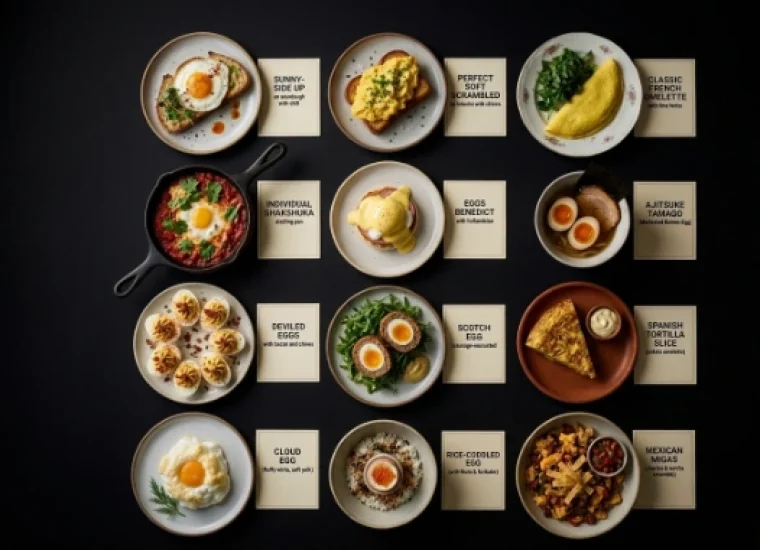
The seven classic egg cooking methods are scrambled, boiled, fried, poached, baked, omelets, and soft-boiled. Each technique creates a different texture and flavor, from creamy scrambled eggs to firm hard-boiled ones. According to the USDA, Americans eat approximately 279 eggs per person each year, making eggs one of the most versatile proteins in any kitchen. Whether you’re grabbing breakfast before work or preparing brunch at la mesa mexican restaurant, knowing these methods helps you cook eggs perfectly every time.
Why Does It Matter How You Cook an Egg?
The cooking method completely changes the egg’s texture, taste, and nutritional profile. Different techniques also require different skill levels and cooking times, ranging from two minutes for soft-boiled eggs to twenty minutes for baked versions.
The way you cook an egg affects how your body absorbs its protein. Research from the Journal of Agricultural and Food Chemistry shows that cooked eggs provide 180% more digestible protein than raw eggs. Temperature control and timing separate runny yolks from rubbery disasters.
Heat transforms egg proteins through a process called denaturation. This is why egg whites turn from clear to opaque white. The yolk changes too, going from liquid to jammy to chalky depending on how long you apply heat.
What Is the Scrambled Egg Method?
Scrambled eggs involve whisking raw eggs with milk or cream, then cooking them in butter over medium heat while stirring constantly. The result is soft, fluffy curds that stay moist when removed from heat at the right moment.
Start by cracking two or three eggs into a bowl. Add a splash of milk and whisk until the mixture turns bright yellow with no streaks. Season with salt and pepper before cooking, not after.
Heat a nonstick pan over medium-low heat. Add a tablespoon of butter and let it melt completely. Pour in the egg mixture and wait ten seconds before stirring. Use a spatula to push the eggs from the edges toward the center.
The eggs will look slightly wet when they’re done. That’s your cue to remove them from heat. They’ll continue cooking on the plate from residual heat. This technique takes about three minutes total.
Pro Tip: Add herbs or cheese during the last thirty seconds of cooking. Chives, parsley, and cheddar work especially well.
How Do You Boil Eggs Correctly?
Boiling eggs requires placing them in cold water, bringing the water to a boil, then timing precisely based on whether you want soft, medium, or hard yolks. The cooking time ranges from six to twelve minutes after the water boils.
Place eggs in a single layer in a saucepan. Add cold water until it covers the eggs by one inch. Put the pan on high heat and bring it to a rolling boil.
Once the water boils, turn off the heat and cover the pan. Set your timer based on what you want:
| Egg Type | Time After Boiling | Yolk Texture |
| Soft-boiled | 6 minutes | Runny center |
| Medium-boiled | 8 minutes | Jammy, slightly soft |
| Hard-boiled | 12 minutes | Completely firm |
After timing, transfer eggs immediately to ice water. This stops the cooking process and makes peeling easier. Let them sit for five minutes before peeling.
That green ring around hard-boiled yolks? It happens from overcooking. Stick to twelve minutes maximum to avoid it.
What Makes Fried Eggs Different?
Fried eggs cook in oil or butter in a hot skillet without stirring, creating distinct whites and yolks. You can make them sunny-side up with runny yolks facing up, or flip them for over-easy, over-medium, or over-hard styles.
Heat a skillet over medium heat and add enough butter to coat the bottom. The butter should sizzle but not brown. Crack the egg directly into the pan, keeping the yolk intact.
For sunny-side up, cover the pan with a lid. The trapped steam cooks the top of the white while the bottom fries. This takes about three minutes. The yolk stays liquid and the whites set completely.
For over-easy eggs, skip the lid. Once the whites turn opaque, slide a spatula under the egg and flip it quickly. Cook for thirty seconds more. The yolk stays runny but the white cooks through.
Over-medium eggs need one minute on the second side. Over-hard eggs need two minutes. Many breakfast spots, including places serving american style eggs, ask your preference before cooking.
How Does Poaching an Egg Work?
Poached eggs cook gently in simmering water without their shells, creating tender whites that wrap around soft, runny yolks. The key is maintaining water at exactly 180-190°F and adding vinegar to help whites coagulate faster.
Fill a medium saucepan with three inches of water. Add one tablespoon of white vinegar. Heat until small bubbles form on the bottom but the water doesn’t boil.
Crack an egg into a small bowl first. This prevents shell pieces and lets you slide the egg gently into the water. Create a gentle whirlpool by stirring the water with a spoon, then slide the egg into the center.
The swirling water wraps the white around the yolk. Let it cook undisturbed for three to four minutes. Use a slotted spoon to lift it out, letting excess water drain off.
Fresh eggs work best for poaching. Older eggs have thinner whites that spread out too much in the water.
What Is the Baked Egg Technique?
Baked eggs cook in a preheated oven, either in muffin tins, ramekins, or mixed into casseroles. They require no flipping or stirring and cook evenly at 350°F for twelve to fifteen minutes.
Preheat your oven to 350°F. Grease a muffin tin or individual ramekins with butter or cooking spray. Crack one egg into each cup and season with salt and pepper.
You can add ingredients before or after the egg. Try cooked bacon pieces, cheese, diced peppers, or spinach. The egg will cook around and through these additions.
Bake for twelve minutes for runny yolks or fifteen minutes for set yolks. The whites should look completely opaque with no jiggle when you remove them.
This method works great for meal prep. Make a dozen at once and store them in the fridge for up to four days.
How Do You Make a Perfect Omelet?
Omelets start like scrambled eggs but cook without stirring, then fold around fillings like cheese, vegetables, or meat. The technique requires a hot pan, constant swirling, and quick folding before the eggs overcook.
Whisk two or three eggs with a tablespoon of milk until smooth. Season with salt and pepper. Heat a nonstick pan over medium-high heat and add butter.
Pour in the eggs. They should sizzle immediately. Let them sit for five seconds, then use a spatula to push cooked portions toward the center while tilting the pan to let raw egg flow to the edges.
When the eggs look almost set but still slightly wet on top, add your fillings to one half. Common options include:
- Shredded cheddar or Swiss cheese
- Diced ham or cooked bacon
- Sautéed mushrooms and onions
- Fresh spinach and tomatoes
- Avocado slices and salsa
Fold the empty half over the filled half using your spatula. Slide the omelet onto a plate. The whole process takes about four minutes.
What About Soft-Boiled Eggs?
Soft-boiled eggs are technically a variation of boiled eggs, featuring firm whites and liquid yolks. They cook for exactly six to seven minutes in boiling water, then cool in ice water to stop the cooking process at the perfect moment.
Bring a pot of water to a rolling boil. Lower eggs in gently using a spoon to prevent cracking. Set a timer for exactly six minutes for very runny yolks or seven minutes for slightly thicker yolks.
Prepare an ice bath while the eggs cook. When the timer goes off, transfer eggs immediately to the ice water. Let them sit for two minutes.
To serve, tap the top of the egg with a spoon to crack the shell. Peel away the top portion and scoop out the egg with a small spoon. You can also peel it completely and cut it in half.
Soft-boiled eggs work perfectly on top of ramen, salads, or toast. The runny yolk acts as a built-in sauce.
Pro Tip: Room temperature eggs cook more evenly than cold eggs straight from the fridge. Let them sit out for ten minutes before boiling.
Which Egg Cooking Method Is Healthiest?
Poached and boiled eggs rank as the healthiest options because they use no added fats. One large poached egg contains seventy calories and six grams of protein. Fried and scrambled eggs add fifty to one hundred calories from butter or oil.
That doesn’t mean fried eggs are unhealthy. The fat helps your body absorb fat-soluble vitamins A, D, E, and K found naturally in egg yolks. Using olive oil instead of butter adds heart-healthy monounsaturated fats.
Baked eggs split the difference. You control exactly how much fat you add to the pan. A light coating of cooking spray keeps calories low while preventing sticking.
Frequently Asked Questions
Can you cook eggs without oil or butter?
You can cook eggs in a well-seasoned cast iron pan or high-quality nonstick pan without added fat. The eggs might stick slightly and won’t develop the rich flavor that butter provides. Adding a tablespoon of water to the pan creates steam that helps prevent sticking.
Why do my scrambled eggs turn gray?
Gray scrambled eggs result from cooking at too high a temperature or for too long. The sulfur in egg whites reacts with iron in the yolk, creating ferrous sulfide. Cook scrambled eggs over medium-low heat and remove them while they still look slightly wet.
How long do cooked eggs last in the refrigerator?
Hard-boiled eggs last one week in the shell or five days peeled. Scrambled, fried, and baked eggs last three to four days in an airtight container. Always refrigerate cooked eggs within two hours of cooking to prevent bacterial growth.
What causes eggs to crack while boiling?
Rapid temperature changes crack eggs during boiling. Starting with cold water and bringing it to a boil gradually prevents most cracks. You can also poke a small hole in the rounded end of the shell with a thumbtack to release pressure as the egg heats.
Should you add milk to scrambled eggs?
Milk makes scrambled eggs fluffier and increases the volume. Use one tablespoon of milk per two eggs. Some cooks prefer cream for richer eggs or water for lighter eggs. You can skip liquid entirely for denser, more custardy scrambled eggs.
Why do egg whites not whip in a plastic bowl?
Plastic bowls retain traces of fat even after washing. The smallest amount of fat prevents egg whites from forming stiff peaks. Use glass or metal bowls for whipping egg whites, and make sure they’re completely clean and dry.
Can you freeze cooked eggs?
Scrambled eggs freeze well for up to three months. Hard-boiled eggs turn rubbery when frozen because the whites release too much water. Fried and poached eggs don’t freeze well either. Baked egg dishes like quiches freeze successfully.