
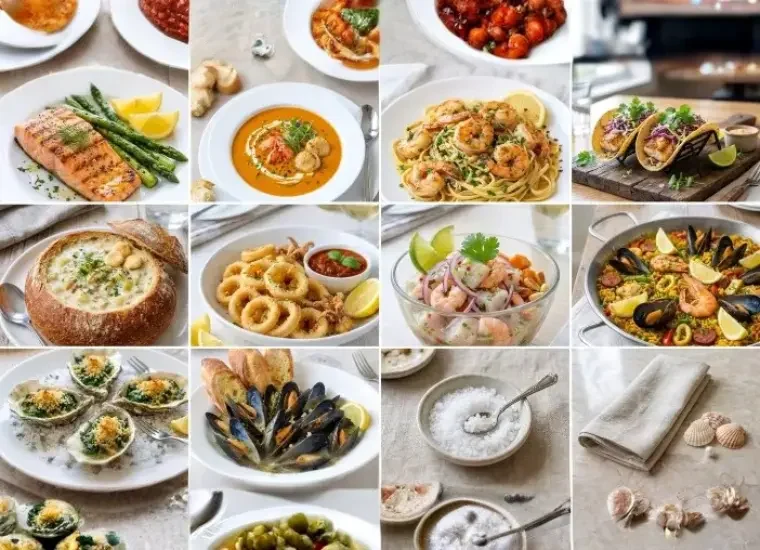
Ceviche, seafood soup, seafood cocktail, seafood pasta, sushi and poke bowls, seafood tacos, seafood paella, grilled seafood, fried seafood, and baked seafood make up the 10 main types of seafood dishes.
Each one uses a different cooking method, some use no heat at all, some use hours of simmering, and that method decides the texture, the calorie count, and the flavor you end up with. Guests can see how several of these styles come together on the full La Casa Blanca menu.
Why Seafood Belongs on the Table More Often
Seafood supplies omega-3 fatty acids that support heart health, and health authorities recommend 8 ounces or more of seafood per week for adults. A federal fact sheet from the National Institutes of Health confirms that regular seafood intake, in place of less healthy proteins, supports cardiovascular health. A separate umbrella review published on PMC also links fish consumption to 32 beneficial health outcomes across dozens of studies.
Seafood Dishes Comparison at a Glance
The table below compares all 10 types side by side, so you can see the cooking method, prep time, and calorie range before reading the full breakdown. For a broader look at how a Mexican kitchen organizes its offerings, see our guide on the 7 types of menus a restaurant typically runs.
| Dish Type | Cooking Method | Heat Used | Typical Prep Time | Approx. Calories (per serving) |
| Ceviche | Citrus-acid curing | None | 20–30 min + 15 min rest | 120–180 |
| Seafood Soup | Simmering in broth | Low-medium | 30–45 min | 180–260 |
| Seafood Cocktail | Poaching, then chilling | Low | 15–20 min | 100–150 |
| Seafood Pasta | Sautéing + boiling | Medium-high | 20–25 min | 450–600 |
| Sushi / Poke | Raw, rice-based | None | 15–20 min | 300–400 |
| Seafood Tacos | Grilling or frying | Medium-high | 15–20 min | 250–350 (per taco) |
| Seafood Paella | Rice cooked in stock | Medium | 45–60 min | 400–550 |
| Grilled Seafood | Direct open-flame heat | High | 8–15 min | 200–300 |
| Fried Seafood | Deep-frying in batter | High | 10–15 min | 350–500 |
| Baked Seafood | Dry oven heat | Medium | 20–30 min | 220–320 |
Calorie ranges are approximate per standard restaurant portion and vary with protein and sauce.
The 10 Types of Seafood Dishes, Explained
Each type below covers its cooking method, 3 real examples, and a nutrition or sourcing note that most seafood guides leave out.
1. Ceviche and Marinated Raw Seafood
Ceviche cures raw fish or shrimp in citrus juice instead of heat. The acid in lime juice denatures the protein and turns it opaque, the same visual change that cooking produces, but without raising the temperature. That’s also why ceviche carries a higher food-safety requirement than cooked seafood: it needs fish that was frozen first to kill parasites, a step the FDA recommends for any raw or undercooked seafood dish. Three regional styles show how differently cooks build on the same idea:
- Classic Ceviche: Shrimp or fish marinated in lime juice with tomato, onion, and cilantro
- Ceviche Mixto: A Peruvian mix that adds squid, octopus, and clams to the fish
- Ceviche de Conchas Negras: Black clams cured with ají limo pepper and rocoto paste
Because nothing is cooked, ceviche keeps more of the fish’s natural omega-3 content intact than frying or grilling does, which is one reason it often shows up on lists of the healthiest meals at a Mexican restaurant. Served with avocado and tostadas, it’s one of the highlights on the seafood specials menu.
2. Seafood Soup
Seafood soup simmers fish, shellfish, or a mix of both in a seasoned broth until the broth carries the flavor of everything that went into it. Coastal regions each built their own version around whatever was caught locally. Three well-known examples:
- Siete Mares (Seven Seas Soup): A Mexican soup built on 7 types of seafood in one bowl
- Lohikeitto: A creamy Finnish salmon soup with potatoes and dill
- Kalakeitto: A lighter Finnish fish soup made with mixed vegetables
A bowl of a broth-based seafood soup like Siete Mares runs noticeably lower in fat than a cream-based version like Lohikeitto, so if a lighter meal matters, the broth-based style is the one to order. Siete Mares sits alongside other homemade options on the soups menu.
3. Seafood Cocktail and Chilled Appetizers
A seafood cocktail chills cooked shrimp, crab, or octopus in a tangy sauce and serves it before the main course, so it’s built to wake up the appetite rather than fill the stomach. Common versions include:
- Shrimp Cocktail: Poached shrimp served in a spicy tomato-based sauce
- Campechana: A Mexican mix of shrimp and octopus in citrus and hot sauce
- Conchitas a la Parmesana: Scallops broiled with parmesan, butter, and lime
Poaching keeps this category leaner than fried appetizers, since no oil is absorbed during cooking, worth knowing if you’re comparing starter options by calories.
4. Seafood Pasta and Noodle Dishes
Seafood pasta pairs shrimp, scallops, or fish with noodles in a sauce, and the sauce is what actually defines the dish. This category spans Italian, American, and Asian kitchens alike. Three examples:
- Shrimp Scampi: Shrimp in a garlic butter and white wine sauce
- Scallop Pasta with Lemon and Herbs: Seared scallops over pasta with a citrus finish
- Pancit Canton with Sardines: A Filipino stir-fried noodle dish built on canned sardines
One protein, one sauce base, and a noodle that soaks it up, that formula repeats across every cuisine that has adopted it, which is part of why seafood pasta is one of the highest-calorie categories on this list.
5. Sushi, Sashimi, and Poke Bowls
Sushi and its related dishes serve raw or lightly seared fish over rice, or on its own, a format that grew out of a Japanese fish-preservation method and became a global category on its own. Three signature styles:
- Nigiri Sushi: Hand-pressed rice topped with a slice of raw fish, most often tuna or salmon
- Kaisendon: A rice bowl topped with a mix of assorted raw seafood, called sashimi
- Poke Bowl: A Hawaiian bowl of seasoned raw fish, rice, and crunchy vegetables
As with ceviche, any raw preparation should use fish labeled sushi-grade or previously flash-frozen, restaurants are required to follow this for food-safety reasons, and it’s worth checking for at home too.
6. Seafood Tacos
A seafood taco wraps grilled or fried fish or shrimp in a warm tortilla with a fresh topping that balances the richness of the seafood underneath. Three popular fillings:
- Baja-Style Fish Tacos: Battered white fish with a tangy slaw and creamy sauce
- Shrimp Tacos: Grilled or sautéed shrimp with a cilantro-lime sauce
- Tacos Gobernador: A Sinaloan taco filled with shrimp, cheese, and griddled tortillas
Grilled versions run lighter than battered ones; swapping fried fish for grilled fish in the same taco cuts a meaningful share of the calories without changing the toppings. Shrimp and Fish Tacos are both on the à la carte menu, and tacos get their own spotlight every week during Taco Tuesday.
7. Seafood Paella and Rice Dishes
Seafood paella and its regional cousins cook rice directly in seafood stock, so the rice absorbs the flavor instead of just sitting next to it on the plate. Three well-known rice dishes:
- Seafood Paella: A Spanish rice dish with shrimp, mussels, and saffron
- Arroz con Bogavante: A Valencian rice dish built around whole lobster
- Shrimp and Rice Skillet: A quicker, weeknight take on the same technique
Because the rice cooks in stock rather than plain water, this category needs almost no added salt or sauce, which keeps the sodium count lower than a comparable fried-rice dish.
8. Grilled and Blackened Seafood
Grilling exposes fish or shrimp to direct, high heat, which caramelizes the surface while keeping the inside moist, and blackening adds a dry spice crust before the sear. Three common preparations:
- Grilled Salmon: Salmon fillets seasoned and cooked over an open flame
- Blackened Salmon: Salmon coated in a Cajun spice blend and seared until dark
- Grilled Shrimp Skewers: Shrimp threaded on skewers and charred in under 5 minutes
Grilling adds no batter and needs little oil, so it’s the leanest cooking method on this list after ceviche and poaching. Guests who prefer shrimp sautéed rather than fried can also order the Shrimp Fajitas off the à la carte menu.
9. Fried and Battered Seafood
Fried seafood coats fish or shellfish in flour, batter, or breadcrumbs before deep-frying it. The coating locks in moisture and adds crunch, at the cost of extra oil absorption. Three examples eaten around the world:
- Fried Calamari: Squid rings dredged in flour and fried until golden
- Fritto Misto di Pesce: An Italian mix of assorted fried seafood
- Peruvian Jalea: Breaded, fried fish combined with fried squid and shrimp
Choose this category for texture and crunch; choose grilled or baked if calories are the priority, since frying roughly doubles the calorie count of the same fish cooked another way.
10. Baked and Roasted Seafood
Baking cooks fish or shellfish slowly in an oven, so it stays tender without added oil, which suits home cooks who want a hands-off dinner. Three reliable dishes:
- Baked Salmon: Salmon roasted with a seasoned crust
- Mediterranean Baked Fish: White fish roasted with tomatoes, olives, and lemon
- Baked Fish Fillet with Mayo Topping: Frozen fish fillets topped with a creamy mayo mix and baked until golden
Baking sits in the middle of this list calorie-wise: leaner than frying, but not as light as ceviche or grilling, since sauces and toppings vary the count more than the cooking method does.
How to Choose the Right Seafood Dish for the Occasion
The same fish can suit 3 very different moments depending on how it’s cooked:
- Light lunch or hot-weather meal: Ceviche, seafood cocktail, or a poke bowl deliver protein without the heaviness of a fried or cream-based dish.
- Date night or celebration dinner: Seafood paella or grilled whole fish turn a meal into an occasion, since both take longer to prepare and are usually shared.
- Casual weeknight dinner: Seafood tacos or baked fish fillets take 20 minutes or less and need only one pan or sheet tray.
Match the dish to the occasion first, then pick the specific recipe, a paella recipe rushed into 20 minutes loses the slow stock-absorption that defines the dish. For more everyday pairing ideas, the top 5 Mexican dishes to try in La Mesa is a useful starting point.
Drink Pairings for Each Seafood Style
Pairing isn’t random; acidity, richness, and spice level each call for a different drink:
- Ceviche and raw seafood: Pair best with a crisp, high-acid white wine or a light lager, since both cut through the citrus without competing with it.
- Fried and battered seafood: Pair well with a citrus-forward beer or a margarita, since the acidity balances the oil.
- Seafood soup and paella: Pair well with a dry rosé or a medium-bodied white, since both dishes carry enough spice to overwhelm a heavier red.
Seafood Sourcing: What “Fresh” Actually Means
Menus use the word “fresh” loosely, so it helps to know what to actually check for:
- Smell: Fresh seafood smells like the ocean or faintly sweet, never sharp or ammonia-like.
- Sourcing label: “Wild-caught” and “farm-raised” aren’t a quality ranking on their own; both can be sustainable or not depending on the fishery or farm.
- Seasonality: Shrimp, salmon, and shellfish all have peak seasons; a dish ordered in season is more likely to use fish caught days, not weeks, before it reached the kitchen.
Taste These Seafood Dishes at La Casa Blanca
La Casa Blanca in La Mesa, California, serves several of these styles on its regular menu, including Ceviche, Shrimp Cocktail, Campechana, and Siete Mares. Visit the full menu to see the complete seafood lineup, read the restaurant’s story, check what guests are saying on the reviews page, or contact the restaurant to reserve a table for a seafood night.
Frequently Asked Questions
Which seafood dish has the fewest calories?
Ceviche and grilled seafood generally come in lowest, since neither uses added oil or batter.
Is raw seafood, like ceviche or sushi, safe to eat?
It’s safe when the fish was previously frozen to kill parasites, a standard practice at any restaurant following FDA seafood-safety guidelines.
What’s the difference between a seafood cocktail and ceviche?
A seafood cocktail uses cooked (usually poached) seafood chilled in sauce, while ceviche uses raw seafood cured by citrus acid — the seafood in a cocktail is never raw.
Which seafood dish works best for a light lunch versus a full dinner?
Ceviche, seafood cocktail, and grilled seafood work well as lighter meals; paella, seafood pasta, and fried seafood are heavier, dinner-sized dishes.
What is the healthiest way to cook seafood?
Grilling, baking, and curing (as in ceviche) add the least fat, since none of the 3 methods require oil the way frying does.
How much seafood should you eat per week?
Health authorities recommend at least 8 ounces of seafood per week for adults, spread across 2 or more meals.
What’s the difference between seafood paella and jambalaya?
Paella cooks rice in seafood stock with saffron and stays mostly uncovered for a crisp bottom layer, while jambalaya is a Louisiana rice dish cooked covered with a tomato-and-spice base and often includes sausage alongside the seafood.
Which seafood dish is best for someone who doesn’t like a “fishy” taste?
Shrimp- and scallop-based dishes, like shrimp tacos or shrimp scampi, tend to taste milder than dishes built on oily fish like salmon or sardines.